
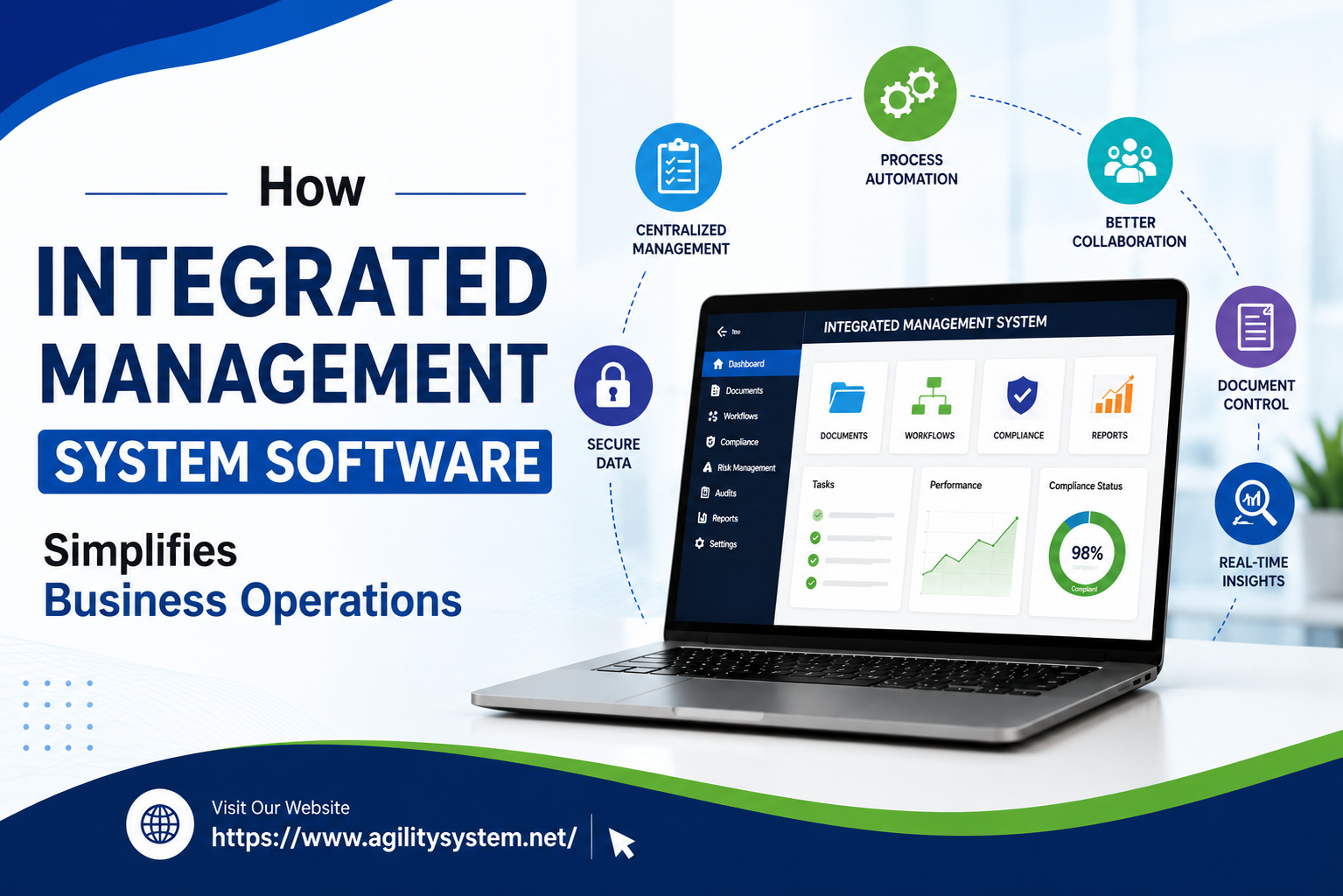
How Integrated Management System Software Simplifies Business Operations
In today’s fast-moving business environment, companies are constantly searching for ways to improve efficiency, reduce operational complexity, and increase productivity. Managing multiple departments, processes, and compliance requirements using separate systems can quickly become overwhelming. Businesses often struggle with disconnected workflows, duplicated data, communication gaps, and time-consuming manual tasks.
This is where Integrated Management System Software becomes an essential business solution. It combines multiple business management functions into one centralized platform, helping organizations streamline operations, improve collaboration, and maintain better control over their daily activities.
Whether it is document management, workflow automation, compliance tracking, risk management, or performance monitoring, integrated management system software helps businesses manage everything from a single system. In this blog, we will explore how integrated management system software simplifies business operations and why it has become an important tool for modern organizations.
What Is Integrated Management System Software?
Integrated Management System Software is a digital platform that combines various management processes and business functions into one unified system. Instead of using separate tools for quality management, health and safety, compliance, audits, document control, and workflow management, businesses can manage all these processes through one centralized platform.
The main purpose of this software is to simplify operations by improving communication, reducing duplication, and creating a more organized workflow across the organization.
By integrating multiple functions into one system, businesses can improve efficiency, save time, and reduce operational challenges.
The Problems with Separate Business Systems
Many companies still use multiple software platforms or manual systems to manage different business activities. While this may work temporarily, it often creates long-term operational issues.
Some common problems businesses face include:
- Duplicate data entry
- Poor communication between departments
- Difficulty managing documents
- Increased risk of human error
- Time-consuming reporting processes
- Limited visibility into operations
- Compliance management challenges
- Delays in approvals and decision-making
When systems are disconnected, employees spend more time switching between applications, searching for information, and correcting errors. This reduces productivity and slows down business growth.
Integrated management system software solves these problems by bringing all business operations together into one organized platform.
Centralized Information Management
One of the biggest advantages of integrated management system software is centralized data management. All important business information, documents, records, and workflows are stored in one secure location.
This allows employees to easily access the information they need without searching through multiple systems or files.
Centralized management helps businesses:
- Improve data accuracy
- Reduce duplicate information
- Increase operational transparency
- Save time and resources
- Improve team collaboration
Having a single source of information ensures consistency across departments and helps employees work more efficiently.
Workflow Automation Improves Efficiency
Manual processes can consume a large amount of time and often lead to delays or mistakes. Integrated management system software simplifies operations by automating repetitive tasks and workflows.
Automation can handle tasks such as:
- Document approvals
- Notifications and reminders
- Task assignments
- Compliance tracking
- Audit scheduling
- Report generation
For example, if a document requires approval from multiple managers, the software can automatically route it to the correct people and send reminders when action is needed.
This reduces administrative work, speeds up processes, and improves accountability throughout the organization.
Better Communication and Collaboration
Poor communication between departments is a major challenge for many businesses. When teams use different systems, important information can become difficult to share or track.
Integrated management system software improves collaboration by giving all departments access to shared information and real-time updates.
Employees can:
- Share documents easily
- Track workflow progress
- Communicate within the system
- Access updated information instantly
- Collaborate on projects more effectively
Improved communication helps teams work together more efficiently and reduces misunderstandings that can slow down operations.
Simplified Compliance Management
Compliance is an important part of business operations, especially for companies working under industry regulations and standards. Managing compliance manually can be stressful and time-consuming.
Integrated management system software simplifies compliance management by organizing all compliance-related activities in one place.
Businesses can use the software to:
- Store compliance documents securely
- Monitor regulatory requirements
- Schedule audits and inspections
- Track corrective actions
- Generate compliance reports automatically
This makes it easier for organizations to maintain accurate records and stay prepared for audits or inspections.
Improved Document Control
Documents are a critical part of every business operation. However, managing documents manually or across multiple systems often leads to confusion, outdated files, and security risks.
Integrated management system software provides advanced document control features that help businesses organize and protect important information.
Features often include:
- Centralized document storage
- Version control
- Access permissions
- Secure file sharing
- Automated document workflows
Employees can quickly find the latest version of a document, reducing mistakes caused by outdated information.
Real-Time Reporting and Business Insights
Business leaders need accurate information to make informed decisions. Integrated management system software provides real-time reporting and analytics that help managers monitor performance and identify areas for improvement.
The software can generate reports related to:
- Workflow performance
- Employee productivity
- Compliance activities
- Risk management
- Operational efficiency
Real-time insights allow businesses to respond quickly to problems and make better strategic decisions.
Reduced Operational Costs
Using multiple systems often increases software costs, maintenance expenses, and employee training requirements. Integrated management system software reduces these costs by replacing separate tools with one unified solution.
Businesses can save money through:
- Lower software licensing costs
- Reduced administrative workload
- Fewer operational errors
- Improved resource utilization
- Faster process completion
Over time, these cost savings can significantly improve overall business profitability.
Scalability for Business Growth
As businesses grow, operations become more complex. Integrated management system software is designed to scale alongside business growth, making it easier to manage increasing workloads and expanding teams.
The software can support:
- Multiple departments
- Additional users
- New workflows and processes
- Expanding compliance requirements
- Remote and hybrid work environments
This flexibility helps businesses maintain efficiency even as their operations grow larger and more demanding.
Better Customer Service
Efficient internal processes often lead to improved customer experiences. When employees can access information quickly and complete tasks efficiently, customers receive faster and more reliable service.
Integrated management system software helps businesses:
- Respond to customer inquiries faster
- Reduce delays and errors
- Improve service quality
- Maintain consistent communication
A more organized business operation leads to higher customer satisfaction and stronger long-term relationships.
Conclusion
Integrated Management System Software plays an important role in simplifying modern business operations. By combining multiple processes into one centralized platform, businesses can improve efficiency, reduce operational complexity, and enhance collaboration across departments.
From workflow automation and document control to compliance management and real-time reporting, integrated systems help organizations operate more smoothly and effectively.
As businesses continue to face growing operational demands, investing in integrated management system software can provide the tools needed to stay organized, productive, and competitive in today’s business world.





0 Comments